EcoFlow buyer’s guide · DELTA 3
EcoFlow DELTA 3: specs, runtime and who it’s for
1,024 Wh of storage and 1,800 W of continuous output , with LFP battery chemistry. Here’s what that means for brownouts in a Philippine home.
Spec-based guide — we haven’t tested this unit. Specs from EcoFlow, checked October 27, 2026.
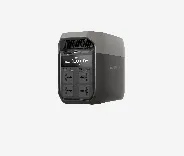
EcoFlow DELTA 3
Prices and stock change often — check the current price on EcoFlow’s Philippine store.
Who it suits
Good for
- Overnight brownouts for a fan, Wi-Fi and lights
- Keeping a refrigerator running for some hours (check your fridge’s start-up surge)
- Carrying around the house, to work or on trips
- Short bursts of higher-power appliances such as a rice cooker or a small inverter aircon
- Growing your backup later — expandable to 5,000 Wh
- Recharging from solar panels (up to 500 W of input)
Less suited to
- Long daily aircon use — a hybrid solar system suits that better.
Based on the published specs and the example appliance wattages below. Check your own appliances’ labels.
Specifications
| Battery capacity | 1,024 Wh |
|---|---|
| Battery chemistry | LFP |
| Rated cycle life | 4000 cycles to 80% capacity |
| Continuous AC output | 1,800 W |
| Surge AC output | 3,600 W |
| X-Boost | 2,400 W |
| AC outlets | Not stated |
| USB-C maximum | 100 W |
| Solar input | 500 W (11-60V) |
| AC charging | 1500W AC input, 0-100% in 56 min |
| Expandable to | 5,000 Wh — 'Support DELTA 2 EB, DELTA 2 Max EB, DELTA Pro 3 EB, and DELTA 3 EB (Up to 5kWh)'. 5000 is EcoFlow's stated rounded figure. |
| UPS / EPS switchover | 10 ms |
| Weight | 12.5 kg |
| Dimensions | 398 x 200 x 284 mm |
Source: EcoFlow official specifications, checked October 27, 2026. Specs can change — confirm on EcoFlow’s page before buying.
Estimated brownout runtimes
Runtime ≈ 1,024 Wh × 0.85 ÷ load (W). The 0.85 factor allows for usable capacity and AC conversion losses, in line with the factor EcoFlow and other makers use. Real runtime varies.
| Scenario (example wattages) | Load | Estimated runtime |
|---|---|---|
| Essentials: fan, Wi-Fi router, three LED bulbs | 97 W | 8 h 58 min |
| Essentials + phone charging + laptop | 187 W | 4 h 39 min |
| Essentials + refrigerator (compressor ~⅓ of the time) | 130 W | 6 h 41 min |
What it can run on its own
Each appliance by itself, using example wattages. Motor appliances are checked against the surge rating at about 3× their running watts.
| Appliance | Example load | Can it run it? | Runtime alone |
|---|---|---|---|
| Electric fan | 60 W | Yes | 14 h 30 min |
| LED bulb × 3 | 27 W | Yes | 32 h 14 min |
| Wi-Fi router | 10 W | Yes | 3.6 days |
| Phone charging × 2 | 30 W | Yes | 29 h 1 min |
| Laptop | 60 W | Yes | 14 h 30 min |
| LED TV | 80 W | Yes | 10 h 53 min |
| Refrigerator | 100 W | Yes | 8 h 42 min |
| Chest freezer | 100 W | Yes | 8 h 42 min |
| Desktop computer + monitor | 150 W | Yes | 5 h 48 min |
| Rice cooker (cooking) | 700 W | Yes | 1 h 15 min |
| Water pump | 370 W | Yes | 2 h 21 min |
| Aircon (inverter, small room) | 900 W | Yes | 58 min |
Fridges, freezers and aircons cycle on and off, so they usually last longer than the “runtime alone” figure suggests.
Recharging with solar
It accepts up to 500 W of solar input (11-60V). With about 4.7 peak sun hours a day (the Philippine average) and allowing about 20% for losses, a full recharge from empty takes roughly:
- 1.3 sunny days with a 200 W panel
- 0.5 sunny days with 500 W of panels (its maximum input)
Estimate: capacity ÷ (panel watts ÷ 1.2 × peak sun hours). Cloudy weather, shading and panel angle reduce charging.
Compared with the nearest models
Looking for a discount? See how to get EcoFlow vouchers and promo codes in the Philippines.
Notes: The variant is labelled 'DELTA 3-INTL'. The AC outlet count is not stated explicitly: the spec reads 'AC Output: 1800W (surge3600w)*4', and the store lists 'Total Output Ports: 11'. The page header says X-Boost 2200W, but the spec table says 2400W. Weight is listed as '<=12.5kg'. Marked 'Sold out' on 2026-10-27.